
Clare Rood/Mary Dodge descendants and ancestors
Four grandparents of #17 Abigail Alden Howes [3ggm 1793-1863] and their ancestors
(Family tree charts continue following all the narratives)

Click the link below to jump to their:
Thomas Howes [5ggf 1727-1793]: Thomas’ parents, Joseph Howes III [6ggf 1697-1786] and his wife Mary Howes [6ggm 1702-1790] (see below) were third cousins. Thomas Howes [9ggf ca. 1590-1665] was great-great grandfather to each- Joseph descended from Thomas’ son Joseph Howes [8ggf 1630-1695] and Mary from another son of Thomas, Jeremiah Howes [8ggf 1637-1706]. All of the immigrant ancestors of Thomas arrived from England, settled in Massachusetts, where all their descendants down to Thomas [5ggf] stayed. They include:

-
Thomas Howes [9ggf ca. 1590-1665] landed in Salem about 1637 with his wife Mary (Burr) Howes [9ggm unk.-1682] and their 3 sons Joseph Howes [8ggf 1630-1695], Thomas and Jeremiah Howes [8ggf 1637-1706], who was born aboard ship during the journey. In 1639, they family moved to Cape Cod and was one of the original settlers and landholders of Yarmouth (current Dennis). Between 1650 and 1656, he acquired "certain farmland [and meadow]..." from Capt. Myles Standish- you remember that name- I tell you, they were all related. Don’t believe me? After Thomas (9ggf) died, his widow Mary married (before 1668), Thomas Prence [9ggf ca. 1600-1693] (see below), Governor of Plymouth Colony, as his 4th wife.
-
Rev. John Mayo [9ggf 1598-1676] arrived in Plymouth Colony about 1638 with his wife Tamesin (Brike) Mayo [9ggm ca. 1600-1683] and their 5 children including daughter Elizabeth (Mayo) Howes [8ggm ca. 1635-1700]. He was the first minister of Old North Church, also known as Second Church or Paul Revere's Church from 1655-73. A brief biography can be found on Wikipedia. <click here> for a link to that site.
-
John Vincent [9ggf 1608-1663], his wife 9ggm Hannah and their son Henry Vincent [8ggf 1635-1722] arrived in New England about 1637 and first settled in Lynn, Massachusetts.
-
Gov. Thomas Prence [9ggf ca. 1600-1693] arrived as a single man in the Plymouth Colony in Nov 1621 on the ship Fortune. In 1644 he moved to Eastham, which he helped found, returning later to Plymouth. For many years, he was prominent in Plymouth Colony affairs, and was Colonial Royal Governor for about twenty years, covering three terms. We descend from his daughter Sarah (Prence) Howes [8ggm 1646-1707], but historians have not been able to tell which of his four wives is her mother. Note that we also descend from his 3rd wife as Apphia (Quick) Freeman (10ggm, divorced wife of Samuel Freeman- see Bathsheba below) and his 4th wife Mary (Burr) Howes (9ggm, widow of Thomas Howes- see above). Thus, we are related to this guy three different ways, two of which I don’t know how to describe. A good biography of Gov. Prence can be found on Wikipedia <click here>.
-
Capt. William Hedge [9ggf 1612-1670] arrived about 1633, settled in Lynn, moved to Sandwich 1638 and Yarmouth by 1643, where he later died. There is mention in a 2 Oct 1658 court record in Plymouth Colony of Hedge being fined 10 shillings for “threatening to have the blood of Edward Sturgis [see next], upon some small difference betwixt them”. Note that Elisha, the son of Hedge, later married Mary, the daughter of Sturgis, in 1665. It was probably a quiet wedding.
-
Edward Sturgis [9ggf 1613-1695] probably arrived in 1634 and received a grant of 4 acres of land in Charlestown in Jan 1635. Edward and his son Edward II both ran an inn and imported alcohol. He was single when he arrived. His wife Elizabeth Hinckley [9ggm 1617-1691] arrived in Plymouth Colony in May or June 1635 (age 17), having crossed the Atlantic aboard the Hercules from Sandwich, England with her brother Samuel and his family. She and Edward married about 1642.
Bathsheba (Sears) Howes [5ggm 1739-1799] This group of family ancestors lived almost exclusively on Cape Cod, the town of Yarmouth. Although agriculture was a prominent part of Yarmouth life, the town's location led some to make their living from the ocean. Bathsheba’s first cousin Capt. Ebenezer Sears [1755-1835] was the first American skipper to take a merchant vessel around the Cape of Good Hope. Two generations later, her second cousin was Capt. Asa Eldridge [1809-1856] <Click here> for his biography. In 1854, he guided the clipper ship Red Jacket to the fastest trans-Atlantic crossing (13+ days) by a commercial sailing vessel, and that record still stands today. Yarmouth is a small, lightly populated area, so we again find several inter-relationships. Her parents were second cousins, once removed. Paul Sears [8/9ggf ca. 1637-1708] is great-great grandfather of her mother Deborah through his daughter Bethia and is also great grandfather of her father Deacon John through his son Capt. John. That makes him both my 9 great grandfather and my 8 great grandfather. Genealogy sure is fun. Immigrant ancestors of Bathsheba include:
-
Richard Sears [9ggf ca. 1595-1676] arrived in Plymouth before March 1633 when he was assessed 9 shillings of corn at 6 shillings per bushel in the Plymouth tax list. In early 1639, he was among a party lead by John Crowe (more about him later- see below), Thomas Howes and Anthony Thatcher that first settled Yarmouth. Richard was a “husbandman”- one that plows and cultivates land (farmer). Records indicate that he married his wife Dorothy in 1637, after his arrival in New England, but I have not been able to find when she separately immigrated.
-
George Willard [9ggf 1614-1656] arrived between 1634 (possibly with his older brother Simon) and 1639 (when he took the ‘oath of allegiance’ in Scituate, Plymouth Colony). He apparently chafed under the yoke of the Puritan leaders and was called into court to answer charges a few times. In 1652, finally having had enough, he moved his family to Maryland, which one writer describes as "... home of real Christian liberty at that day... One who was so free in expressing his opinions would be glad to join in such a colony.” He became a tobacco farmer.
-
Samuel Freeman [10ggf ca. 1600-1646], the first of 3 in a row in our tree by that name, arrived about March 1630 with wife Apphia (Quick) Freeman [10ggm 1604-1668] and oldest son Henry (age 5), settling in Watertown, Mass. Following the March 1631 death of his mother in London, Samuel sailed back to England, most probably aboard the Lyon, in order to settle her estate. There were many lawsuits over his father's partnership with William Bannister involving property in Clerkenwell called "The Glass House". Due to false testimony, he was confined to prison from 1634 until May 1636 (when his petition for release was finally granted). He returned to Watertown shortly thereafter, and his son Deacon Samuel Freeman II [9ggf 1638-1712] was born there in May 1638. Samuel, Sr. and Apphia divorced before 1644 (no records found) when she remarried and became the 3rd wife of Gov. Thomas Pence (see above).
-
Alice (Carpenter) Southworth/Bradford [10&11ggm ca. 1590-1670] we descend from her in two different manners: In this part of our tree, through her son from her first marriage Constant Southworth [10ggf 1615-1679] and in the Warner part of our tree, through her son from her second marriage Maj. William Bradford, Jr. [9ggf 1624-1704]. A widow, she left two sons in England in the care of relatives, and arrived in Plymouth in July 1623 aboard the Anne after a stormy three month voyage. The Anne was the third ship financed by the London-based Merchant Adventurers- following the Mayflower in 1620 and the Fortune in 1621. A few weeks after her arrival, she married the widowed Gov. William Bradford. You will hear more about him later in the Warner branch of our family. Her two sons from her first marriage, 9ggf Constant Southworth (age 13) and Thomas (age 12), arrived in 1628 and finally rejoined their mother in the Bradford household.
-
William Collier [10ggf ca.1585-1671] was sworn a free brother of the Grocers Company first in London (1609) and later in Soutwark (1628), England. <click here> for more details on his life. In 1626, he became one of 58 “Purchasers”, the new investment group for Plymouth Colony (see further discussion in the Barnabas Alden section below). He finally arrived in Plymouth in 1633, aboard an unknown ship, possibly the Mary and Jane and moved to Duxbury by 1639. With him were his wife Jane (Yates) Collier [10ggm 1587-aft.1666] and many children. We descend separately from two of those children- daughter Elizabeth Collier [10ggm ca.1617-1682] married 10ggf Constant Southworth (above) and descend to Clare through this line. In addition, Ruth Collier [9ggm 1627-1694] the youngest daughter of 10ggp William and Jane Collier, will appear in Nonnie’s tree in the Elisha Cole section of 3ggf Abraham Cranmer.
-
Richard Sparrow [10ggf 1580-1660] Although one author/descendant claims an early migration to Jamestown in Virginia, followed by a later move to Plymouth, no support for this has been found. The Great Migration has him in Plymouth by 1632, then moving to Eastham by 1653. He is described as a ‘yeoman’- which denotes the social distinction of a farmer lesser than ‘landed gentry’, but higher than ‘husbandman’. Around 1640, Richard built a house in Plymouth and it still stands today (42 Summer Street) as a house museum and art gallery- the oldest surviving house in Plymouth. His son Capt. Jonathon Sparrow [9ggf 1633-1706] (a military title) should not be confused with Capt. Jack Sparrow (the movie pirate).
-
Edward Bangs [10ggf ca. 1581-1678] also arrived in Plymouth in July 1623 aboard the Anne (see Alice Carpenter above). By 1645 he had moved to Eastham and by 1657 he was an innkeeper there: “Liberty is granted to Edward Bangs to draw and sell wine and strong waters at Eastham, provided it be for the refreshment of the English, and not to be sold to the Indians.” The identity and thus the arrival of his second wife Rebecca, remains uncertain.
-
John Crowe I [10ggf ca. 1590-1652] and his wife Elishua (Unknown) [10ggm unk-1688] arrived in Charlestown in 1623 and in 1638 he was one of three men who led a party of families that first settled Yarmouth. He is the first of four in a row in our tree of that name, but his grandson John Crowell 3 [8ggf 1662-1728] was the first to change the last name to Crowell. Some sources state Mehitable, the wife of John Crowe 2 [9ggf 1639-1689] is Mehitable Miller, daughter of Rev. John Miller, but according to The Great Migration, “the evidence for this has not been seen”.
-
William Eldred [9ggf 1627-1679] it is thought that he and his brother Robert came from England about 1635 and both first settled in Yarmouth. His wife Anne Lumpkin [9ggf 1627-1676] arrived as a young girl in 1637 with her parents William Lumpkin [10ggf 1584-1670] and Tamesin (Constable) Lumpkin [10ggm 1598-1683] and that family also settled in Yarmouth.
-
Richard Taylor [9ggf 1619-1703] arrived in Boston between 1635-39. His wife Ruth Wheldon [9ggm 1625-1693] arrived in June 1638 with her parents Gabriel Wheldon [10ggf ca. 1590-1653] and unknown wife. Her father, Gabriel Weldon, apparently grudgingly, acquiesced to their 1646 marriage in Yarmouth. Ruth's sister Mary married a man before 1646 who also had the name of Richard Taylor, an entirely different man, and they also lived in Yarmouth. In addition, at least three or four other Richard Taylors have been encountered in the records of Plymouth and Massachusetts Bay Colonies. It took a 2010 project to sort out the two men of the same name who married sisters and lived in Yarmouth. In order to differentiate them, our Richard is referred to as "of the rock", due to a large and noteworthy stone near his house, while to other is called “the tailor” due to his occupation.
Barnabas Alden [5ggf 1732-1794] You might guess, based on his last name, that at least some of this section will deal with the Pilgrims and the ship Mayflower, and you would be correct. I will not use this space to go through the stories around those topics, but click on the following hyperlinks for more information on related items: Pilgrims as opposed to Puritans, the Merchant Adventurers were a group of English investors whose capital funded the Pilgrims voyage on the Mayflower, the actual voyage of the Mayflower, the Mayflower Compact- the first governing document of Plymouth Colony signed by 41 male passengers and the 1626 Purchaser investment group, the new investment group (58 men) for Plymouth Colony, replacing the previous group, the Merchant Adventurers. The Purchasers were privileged above all others in future colony land grants. I have been able to identify 13 of our Plymouth ancestors who were ‘Purchasers’: Standish, Prence, Alden, Warren, Simmons, Bradford, Collier, Howland, Snow, Hopkins, Faunce, Deane and Mitchell. There will also be hyperlinks below to some of the more famous of these Pilgrims in our tree. The English immigrant ancestors of Barnabas who have been identified include the following, the first three being Mayflower passengers:
-
William Mullins [10ggf ca. 1572-1621] William Mullins brought his wife Alice and children Priscilla and Joseph on the Mayflower; he also brought over 250 shoes and 13 pairs of boots, his profession being a shoemaker. William must have been fairly well-off, as prior to sailing, he invested in the Merchant Adventurers. He was one of the 41 signers of the Mayflower Compact. William died on 21 February 1621, during the first winter at Plymouth, as did his wife and son Joseph, leaving daughter Priscilla an orphan. Professional genealogists are not convinced that his wife Alice was the mother of Priscilla and Joseph, so I am not including Alice as one of our Mayflower ancestors.
-
Priscilla Mullins [9ggm ca. 1602-ca. 1685] the daughter of William Mullins (above), Priscilla Mullins was about 18 years old when she arrived with her family aboard the Mayflower. As mentioned above, her family all died that first winter, and Priscilla apparently inherited her father’s shares in the Merchant Adventurers. About a year later she married John Alden (see below), probably the third couple to be married in Plymouth Colony. Priscilla and John had ten children, with a possible eleventh dying in infancy.
-
John Alden [9ggf ca. 1598-1687] John Alden was hired in England as the Mayflower's cooper, responsible for maintaining the ship's barrels. Although he was a member of the ship's crew and not a settler, Alden decided to remain in Plymouth Colony when the Mayflower returned to England. He was a signatory to the Mayflower Compact and one of the 1626 Purchasers (see above). About 1628, John Alden, along with Myles Standish and several other Plymouth Colonists, founded the town of Duxbury to the north of Plymouth. Alden was one of Plymouth Colony's most active public servants and played a prominent role in colonial affairs. The Alden Kindred of America, which began as a society of John and Priscilla's descendants, maintains the Alden House Historic Site in Duxbury, Mass.—a home likely built by Alden's son Capt. Jonathan Alden. John died in 1687 at the age of 89, one of the last surviving Mayflower passengers.
-
Moses Simmons [9ggf ca. 1605-ca. 1691] Although he was born in Holland, I am treating him as English. At least one of his parents was a member of the Pilgrims' Separatist church in Leiden (British expats). He arrived in Cape Cod in early Nov 1621 (age 16, most probably a servant) aboard the Fortune, the 2nd ship (after the Mayflower) sent by the Merchant Adventurers Investment group; arrived in Plymouth by end of November. Moses was a member of the 1626 Purchaser investment group. He is found in Duxbury by 1639 and was a ‘yeoman’ farmer. He and wife Sarah (unknown) had seven children, including daughter Mary Simmons [8ggm 1638-1697] who married Joseph Alden, son of John and Priscilla Alden (above).
-
John Dunham [9ggf 1589-1669] arrived in Plymouth in 1632 from Leiden with his second wife Abigail Barlow [9ggm 1600-1669]; John was a weaver and a deacon of the church of Christ at Plymouth.
-
Abraham Shaw [9ggf 1585-1638], his wife Bridget Elizabeth Best [9ggm 1592-1638] and their son John Shaw [8ggf 1630-1701] arrived in Mass. Bay Colony about 1635. Abraham was elected Constable of Dedham Mass. in 1636; he built first bridge across the Charles River. He was a “Clothier” (tailor) while in England and a “Planter” (farmer) in Dedham.
-
Nicholas Phillips [9ggf 1611-1672] arrived with wife Elizabeth Jewson (or Jenson) [9ggm 1612-1671] and some children including daughter Alice Phillips [8ggm 1632-1704] who later married John Shaw (above). The family settled in Dedham, Mass. sometime before 18 Aug 1636, when Nicholas was granted 13 acres of land. He was a butcher. In 1638, Nicholas laid out the first burial ground in Dedham and in 1648, moved to Weymouth where he later died.
-
John Whitmarsh [9ggf 1595-1644] (age39), his wife Alice Garment [9ggm 1600-1644] (age 35), their son John Whitmarsh [8ggf 1624-1709] (age 11), daughter Jane (7), son Onseph (5) and son Richard (2) all departed Weymouth, England 20 Mar 1635 with Rev. Joseph Hull, on an unknown ship carrying 106 total souls. They arrived in Boston harbor 46 days later, on 6 May 1635. Two months later, on 2 Jul 1635 the group settled an area originally called Wessaguscus, but rechristened Weymouth, Mass. Bay Colony at this same time.
-
John Harding [9ggf ca. 1605-1682] arrived in Mass. Bay Colony about 1639 or perhaps slightly earlier. This is based on the reasonable assumption that he is the man of that name who was made a 'freeman' of the colony on 13 May 1640. It appears he arrived a widower with a small daughter, Sarah Harding [8ggm ca. 1634-1693] who later married John Whitmarsh, Jr. (above). Harding settled in Weymouth sometime before 1641, when he was one of five men who were part of the town's governing board.
Elizabeth (Patterson) Alden [5ggm 1739-1803] Whereas we have considerable information on the other three grandparents of Abigail Alden Howes, we have limited information on the ancestors of her grandmother Alden. In addition, the accuracy of much of that information is questionable. What little we do have (assuming it is accurate) contains several interesting stories. Her immigrant ancestors include:
-
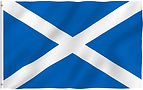
James Paterson [7ggf 1664-1750] is among the extremely few of our ancestors NOT to have arrived in New England from England; he was born in Alloa, Clackmannanshire, Scotland. It is uncertain when he arrived, but it was certainly before his second marriage, in Nov 1704, to Mary (Rowlandson) Talcott [7ggm 1665-1712] in Wethersfield, Connecticut. Mary’s grandfather was:
-
John White [9ggf 1602-1673] arrived in 1639 with wife Joane (West) White [9ggm 1606-1654], son Thomas and daughters Elizabeth, Mary (see below) and Hannah. They first settled in Wenham, then removed to Sudbury. In 1653, he and son Josiah signed the Lancaster Covenant, resulting in the incorporation of Lancaster, Mass.
-
Mary (White) Rowlandson [8ggm 1637-1711] arrived in 1639 with her parents (above). In 1656 (age 19), she married Joseph Rowlandson (see below) in Lancaster. On 10 Feb 1675, during King Philip's War, the settlement was attacked by Native Americans in the Lancaster raid. Mary and three children were captured during the attack and held ransom for 11 weeks and 5 days. After being released, she wrote the book A Narrative of the Captivity and Restoration of Mrs. Mary Rowlandson. It is considered to be one of America's first bestsellers, four editions appearing in 1682 when it was first published. <Click here> for a summary of the book, <Click here> for the complete eBook as published by Project Gutenberg and <Click here> for a Wikipedia recap of her life story.

-
Thomas Rowlandson [9ggf ca. 1597-1657] and his children, including Joseph (see below) are first found in New England at Ipswich, Mass. about 1637 (he was made a ‘freeman’ in 1638).
-
Rev. Joseph Rowlandson [8ggf 1631-1678] was the only graduate of Harvard College in 1652 (College founded 1636). In 1656, he married Mary White (see above). During the Lancaster raid, Joseph (the village minister) was one of the men who had travelled to Boston to secure more troops, and had not yet returned to Lancaster. Following the ransom of Mary for £20, raised by the women of Boston in a public subscription, the family moved from the decimated Lancaster to Wethersfield, Connecticut, where Joseph was installed as pastor in April 1677. On 20 Nov 1678, he preached a sermon about his wife's captivity, "A Sermon of the Possibility of God's Forsaking a People that have been near and dear to him." Three days later, Joseph died suddenly (age 47).
While we do have some information (above) on the ancestors of William Patterson, father of Elizabeth (Patterson) Alden, we have much less on her mother Deborah and what we do have is uncertain. Some researchers dispute the commonly accepted assertion that her maiden name was Walkley and thus her connection to the Walkley/Wakelee tree. However, there appears to be a fair amount of support that that is the case, and I will therefore present the story of her immigrant ancestor, as long as you keep in mind there are questions of the connection:
-
James Wakelee [9ggm ca. 1600-1690] arrived in New England sometime before 1636 when the first record is found of him and his three sons, James, Henry and Richard Walkley [8ggf 1632-1681]. The Society of the Descendants of the Founders of Hartford (Connecticut) considers him to be one it the founders of that town, as he is listed in the Hartford land inventory of February 1639/40 (Click here). He was frequently involved in mercantile activities, though later evidence identifies him as a weaver. On 5 Oct 1652, James married as his second wife, Alice, the widow of James Boosey of Wethersfield, Conn. and moved there following the wedding. Greg Cunningham of the Wethersfield Historical Society wrote an interesting and detailed article for their website titled “The Contentious Life of James Wakelee” (Click here to read). He covers a number of unusual events: 1) From 1643 to 1663, James went to court no less than 37 times, 21 as plaintiff and 16 as defendant; 2) Before their marriage, James sued Alice for ‘breach of covenant’- he thought they were engaged; however she was interested in another. Despite this, they did eventually marry; 3) After their marriage, attempts by James and Alice to divorce each other were unsuccessful (?) and 4) after being accused three times of witchcraft, James left behind his wife, friends and worldly possessions (before Jan 1663) and lived in exiled in Providence, Rhode Island, where he eventually died.


Scottish flag